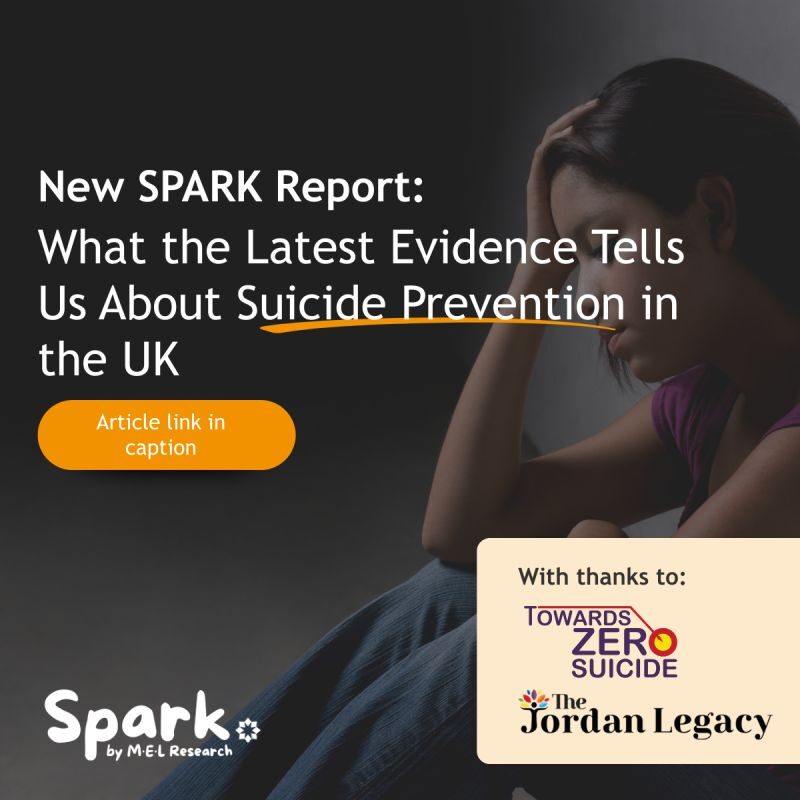
Suicide and self-harm affect far more people than is visible in mortality statistics
What does this mean to you as an employer, educator, colleague, parent, friend or anyone who can play a role in potentially preventing a death by suicide?
During the past few years, The Jordan Legacy CIC has partnered with and contributed to the quarterly SPARK Report, produced by MEL Research.
SPARK stands for SPARK (Suicide Prevention: Attitudes, Risk and Knowledge), and is part of MEL’s Research with a Purpose programme designed to strengthen the evidence base for suicide prevention across the UK.
I would urge you to read this report or at least the headline summary points, which you’ll find here.
Significant highlights in the report include:
- Exposure to suicide and self-harm remains widespread in the UK.
- One third of people report knowing someone who has self-harmed.
- Roughly a quarter report knowing someone who has attempted suicide and survived, or who has died by suicide.
- One in twenty report having witnessed a suicide attempt or a death by suicide.
The Autumn 2025 SPARK findings suggest that there are signs of stabilisation in self-reported health following earlier peaks, but suicidal thoughts remain common, exposure to suicide and self-harm is widespread, and confidence in recognising risk and accessing training is slipping.
The latter point is important to anyone operating in the suicide prevention space. For organisations commissioning, designing, or delivering suicide prevention activity, the implications are practical:
Build confidence, not just awareness
The SPARK measures suggest a capability gap, particularly around recognising suicide risk and initiating direct conversations.
Treat exposure as a prevention and support issue
A significant proportion of the population has direct exposure to suicide and self-harm, with substantial reported ripple effects. This elevates the importance of bereavement support, peer support, and trauma-informed responses.
Meet people where they are learning
With indications that fewer people are learning via formal routes and more via online video, there is an opportunity to improve the quality, consistency, and reach of digital prevention content, without losing the depth of skills-based training.
The message from this SPARK report is clear; suicide and self-harm affect far more people than is visible in mortality statistics and that suicide prevention work often has a broader footprint than services alone. Bereavement support, workforce training, and community capacity-building all matter because the ripple effects are substantial.
View the summary information and access the full report via this link.